A simple guide for business owners
Why This Matters
Meals and entertainment are easy to get wrong, and the rules have changed over the past few years. Getting it right helps you:
- Avoid surprises at tax time
- Stay compliant if you’re ever audited
- Make smarter decisions about spending
The Short Version
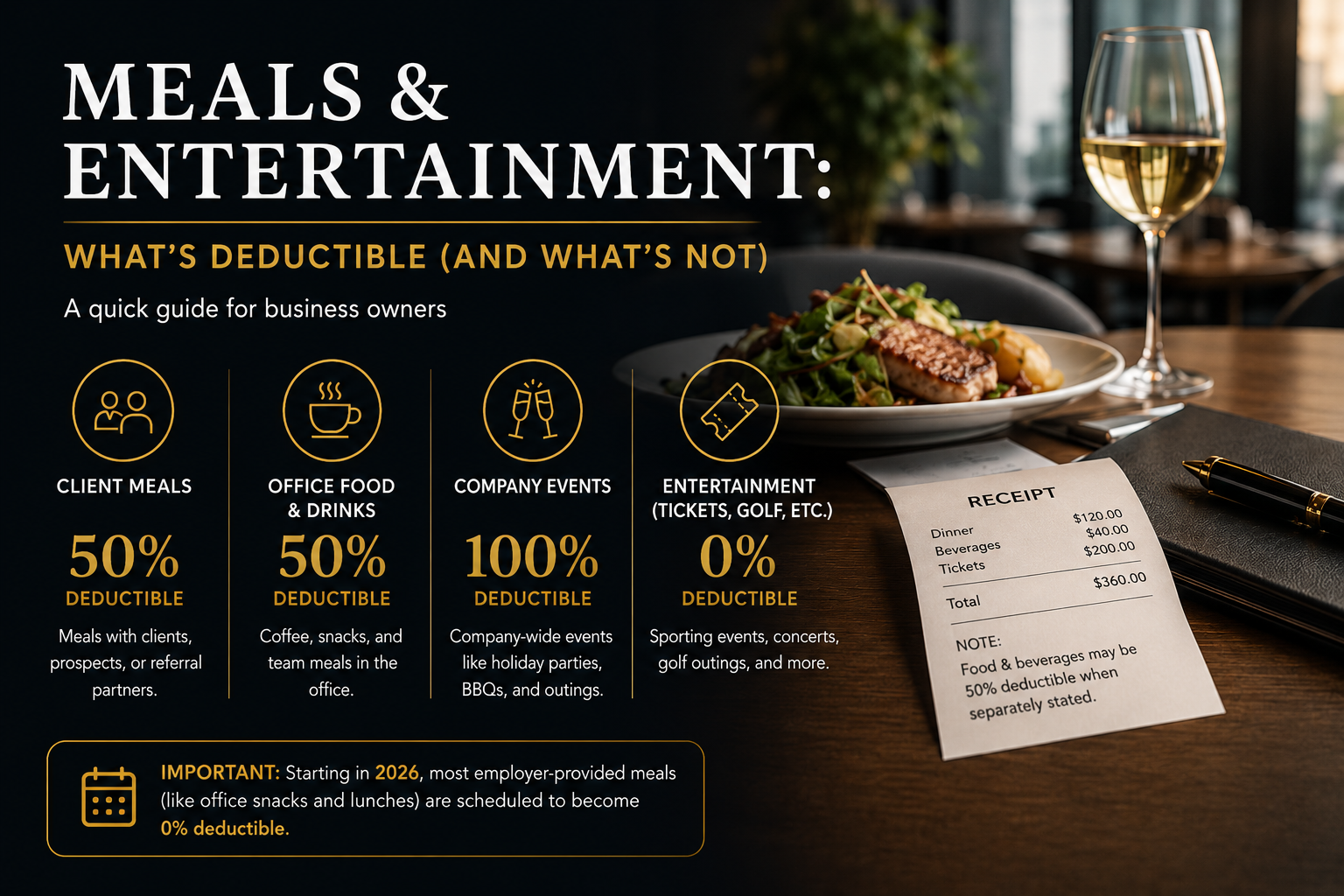
- Client meals: 50% deductible
- Office snacks & meals: usually 50% deductible
- Company parties/events: 100% deductible
- Entertainment (tickets, golf, etc.): not deductible
What You Can Deduct
Client & Business Meals (50%)
Meals with clients, prospects, or referral partners are still partially deductible.
✔ You’re present
✔ There’s a clear business purpose
✔ The cost is reasonable
Examples:
- Lunch with a prospective client
- Coffee with a referral partner
- Dinner after a client meeting
Office Food & Drinks (50%)
Most everyday food in the office falls here.
✔ Coffee, snacks, soda
✔ Team lunches
✔ Meals brought in during busy periods
These used to be fully deductible, but today they’re generally limited to 50%.
Company-Wide Events (100%)
Good news these are still fully deductible.
✔ Holiday parties
✔ Summer outings or BBQs
✔ Events open to all employees
Key point: This needs to be for the whole team, not just owners or leadership.
What You Can’t Deduct
Entertainment (0%)
This is where many people get tripped up.
❌ Sporting events
❌ Concerts
❌ Golf outings
❌ Theater tickets
Even if you’re discussing business, these are not deductible.
One Exception
If food is listed separately on the receipt:
- Tickets → not deductible
- Food → 50% deductible
Important Change Coming
Starting in 2026, most employer-provided meals (like office snacks and lunches) are scheduled to become:
➡️ 0% deductible
That means something you’re currently writing off at 50% may soon provide no tax benefit at all.
What This Means for You
A few things we’re helping clients think through right now:
- Are meals being categorized correctly?
- Are you taking full advantage of 100% deductible events?
- How will the 2026 change impact your tax bill?
Bottom Line
The rules aren’t overly complicated, but they are easy to misapply.
A small adjustment in how expenses are categorized or structured can:
- Improve your deductions
- Reduce audit risk
- Give you better visibility into true costs
If you have questions or want help reviewing how this applies to your business, feel free to reach out. This is one of those areas where a quick conversation can save a lot of headaches later.